Relief for small-scale traders after Ruto intervenes in tax dispute
Small-scale traders in Kenya have received relief following President William Ruto’s intervention in a dispute involving the Kenya Revenue Authority (KRA) and the taxation of goods sold by informal businesses.

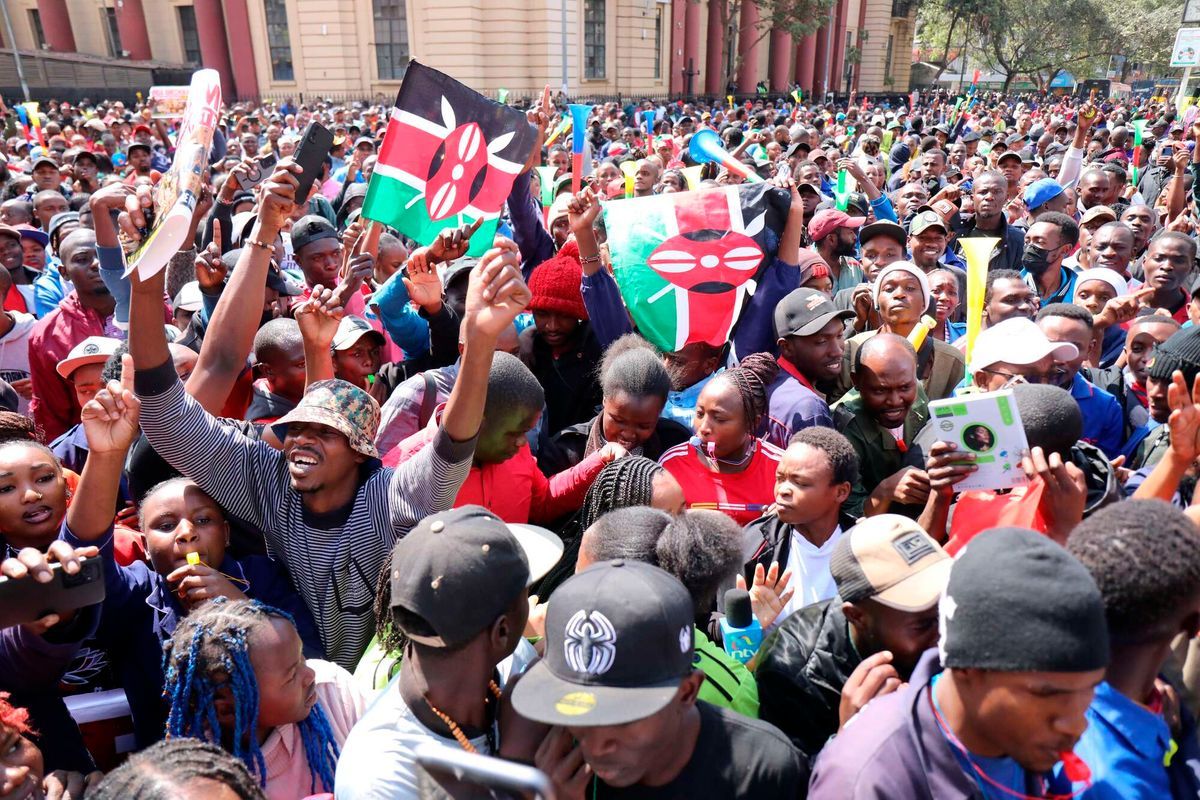
Small-scale traders in Kenya have received relief following President William Ruto’s intervention in a dispute involving the Kenya Revenue Authority (KRA) and the taxation of goods sold by informal businesses.
The disagreement had sparked concern among traders, who argued that the tax requirements being applied to their businesses were increasing their operating costs and making it harder for them to remain competitive.
The dispute centred on the benchmark used by KRA when determining the value of goods for taxation purposes. Traders had raised concerns that the valuation method could result in them paying taxes based on figures that did not accurately reflect the actual value of their merchandise.
President Ruto has now stepped in to address the concerns, directing the relevant government agencies to review the matter and seek a solution that takes into account the realities facing small businesses.
The intervention is expected to ease pressure on thousands of traders who rely on small-scale businesses to earn a living. Informal traders form a significant part of Kenya’s economy, providing employment and supplying affordable goods to consumers across the country.
The tax dispute had also highlighted the difficult relationship between small businesses and tax authorities as the government continues to expand revenue collection.
KRA has been increasing efforts to improve tax compliance and ensure that businesses operating in the informal sector contribute their share of government revenue. However, traders have repeatedly called for tax measures that are predictable, transparent and sensitive to the limited margins under which many small businesses operate.
For traders, the issue goes beyond the amount of tax payable. They have also raised concerns about how tax assessments are made and whether the methods used by revenue officials accurately reflect the actual transactions taking place in the market.
The President’s intervention could lead to further discussions between KRA, traders and other stakeholders on how the taxation framework can be implemented without disrupting small businesses.
The development comes at a time when the government is seeking to widen Kenya’s tax base and increase domestic revenue collection. Small and informal businesses are increasingly coming under scrutiny as authorities explore ways of bringing more economic activity into the formal tax system.
Business groups, however, have maintained that efforts to increase compliance must be accompanied by policies that encourage businesses to grow rather than push them out of the market.
The latest move is expected to give small-scale traders some breathing room as discussions continue on an appropriate tax framework.
The government will now face the challenge of ensuring that any revised approach provides clarity to traders while maintaining the broader objective of improving tax compliance and revenue collection.
For thousands of small traders affected by the dispute, the intervention offers hope that the tax system can be implemented in a manner that recognises the realities of doing business at the grassroots level.