
President Ruto Lands in Italy for High-Stakes Economic Talks
President William Ruto is set to travel to Italy for a three-day State Visit aimed at strengthening bilateral ties and unlocking new economic opportunities between the two nations.

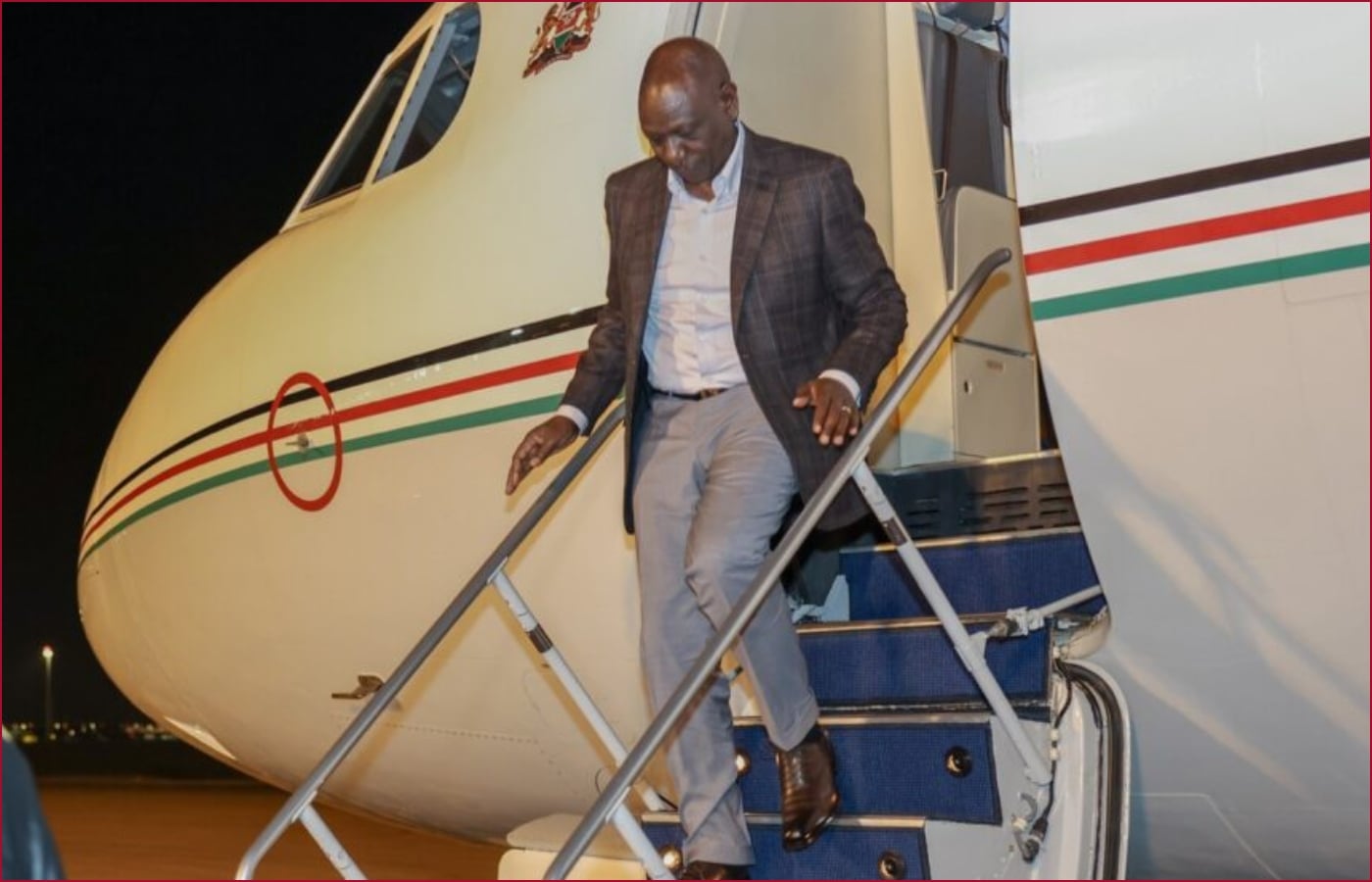
President William Ruto is set to travel to Italy for a three-day State Visit aimed at strengthening bilateral ties and unlocking new economic opportunities between the two nations.
The visit, which comes at a time when Kenya is actively seeking to deepen trade and investment partnerships in Europe, is expected to focus on key sectors including agriculture, manufacturing, energy, and infrastructure development. During his stay, President Ruto will hold high-level talks with Italian leadership, including President Sergio Mattarella and Prime Minister Giorgia Meloni.
State House officials indicate that the discussions will centre on expanding market access for Kenyan exports such as tea, coffee, and horticultural produce, while also attracting Italian investors to Kenya’s growing industrial and renewable energy sectors. Italy remains a key partner within the European Union, making the visit strategically significant for Nairobi’s broader engagement with the bloc.
President Ruto is also expected to engage with members of the Kenyan diaspora in Italy, acknowledging their role in remittances and national development. In addition, he will attend business forums bringing together Kenyan and Italian investors, where new agreements and memoranda of understanding are likely to be signed.
The State Visit underscores Kenya’s foreign policy shift towards economic diplomacy, with the government prioritizing partnerships that deliver tangible benefits in trade, investment, and job creation. It also reflects growing cooperation between Nairobi and Rome in addressing global challenges such as climate change, food security, and sustainable development.
The outcome of the visit is anticipated to further solidify Kenya’s position as a regional economic hub, while opening new avenues for collaboration between the two countries.
BY WANGECI IRUNGU