
Nairobi Locked Down as Saba Saba Protesters Kept Out of CBD at Heavy Economic Cost
A massive security operation that prevented Saba Saba protesters from accessing Nairobi's Central Business District (CBD) came at a significant cost, with businesses, commuters, and public institutions bearing the brunt of the unprecedented lockdown.

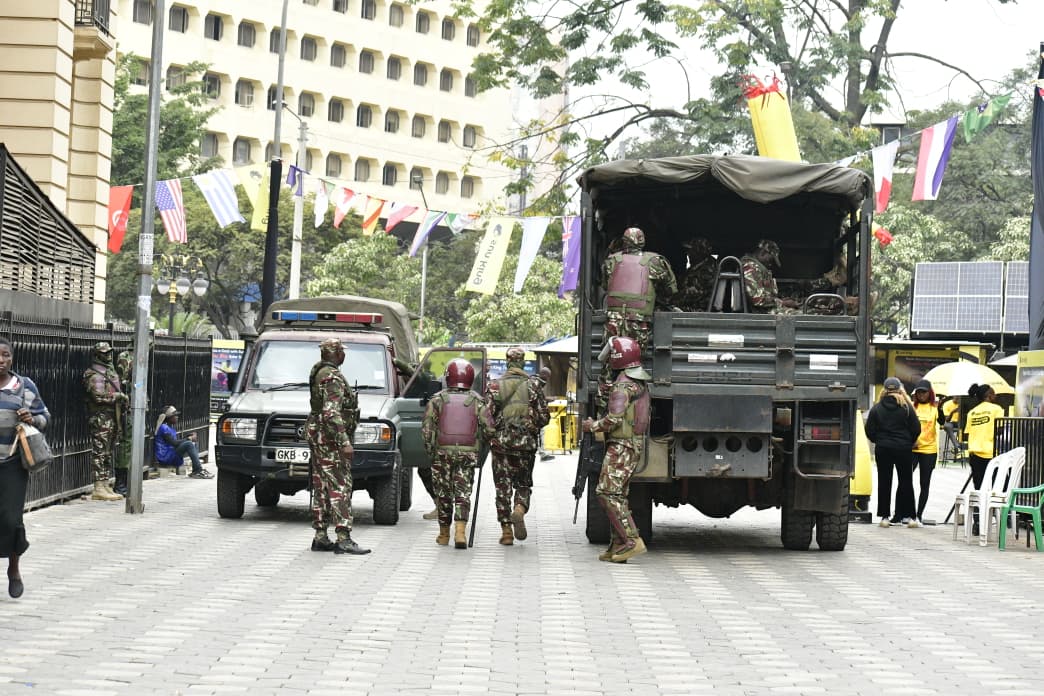
A massive security operation that prevented Saba Saba protesters from accessing Nairobi’s Central Business District (CBD) came at a significant cost, with businesses, commuters, and public institutions bearing the brunt of the unprecedented lockdown.
From the early hours of the morning, major roads leading into the city centre were sealed off by heavily armed police officers, who mounted roadblocks and conducted strict security checks on vehicles and pedestrians. Access to key government installations, including Parliament, was also restricted as authorities sought to stop demonstrators from converging in the capital.
While the security measures largely kept protesters away from the CBD, they also brought normal business activities to a near standstill. Thousands of workers were unable to report to their workplaces, shops remained closed, and public transport operators experienced sharp declines in passenger numbers as movement into the city became difficult.
Retail businesses, restaurants, banks, and informal traders reported significant losses after spending most of the day without customers. Many employers opted to allow staff to work from home, while others suspended operations altogether amid fears of possible confrontations.
Commuters faced long walks after public service vehicles were either diverted or subjected to lengthy security inspections before being allowed into the city. Traffic disruptions extended to several roads surrounding Nairobi, creating widespread gridlock and delaying movement for hours.
Education was also affected, with some schools and learning institutions in urban areas opting to keep students away to avoid exposing them to potential security risks. Several government offices operated with minimal staff as many employees could not access the city centre.
The demonstrations were organized to commemorate the historic Saba Saba movement while also calling for accountability, justice for victims of previous protests, and broader governance reforms. Organisers maintained that they had notified the police in accordance with the law and intended to hold peaceful processions.
Human rights groups and legal experts questioned whether the extensive restrictions on Saba Saba movement were proportionate, arguing that limitations on constitutional rights must satisfy the principles of legality, necessity, and proportionality.
As the city slowly returned to normal, economists and business leaders warned that repeated protest-related shutdowns and security lockdowns could have lasting economic consequences. Beyond the immediate losses suffered by traders and transport operators, they cautioned that continued disruptions risk undermining investor confidence, reducing productivity, and affecting the livelihoods of thousands of Nairobi residents who depend on daily business activity.