KNEC Highlights Common Mistakes That Cost KCSE 2025 Candidates Marks
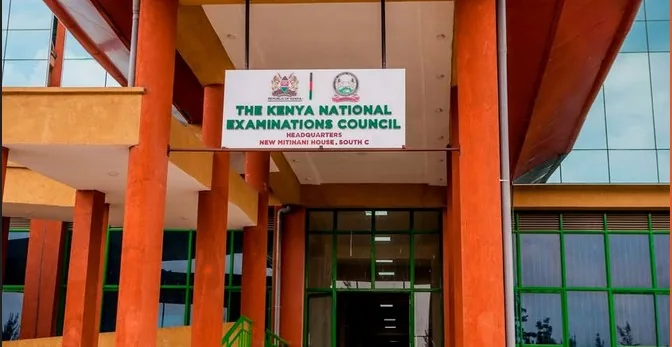
The Kenya National Examinations Council (KNEC) has identified several recurring mistakes that cost candidates valuable marks in the 2025 Kenya Certificate of Secondary Education (KCSE) examinations.

The Kenya National Examinations Council (KNEC) has identified several recurring mistakes that cost candidates valuable marks in the 2025 Kenya Certificate of Secondary Education (KCSE) examinations.
The findings are contained in the council’s latest examiner reports, which provide insights into how candidates performed and highlight areas where learners struggled.
One of the major problems identified was failure to follow the required answer format. In English Paper 1, for instance, some candidates responded to functional writing questions using formats different from those specified, losing marks even when their ideas were relevant.
Examiners also observed that many learners gave correct points without explaining or supporting them. Simply identifying an answer was often insufficient where questions required candidates to give reasons, explanations or justification.
Misinterpretation of questions was another major challenge. Some candidates demonstrated knowledge of a topic but answered a different question from the one presented, resulting in lost marks.
The reports further highlighted problems with handwriting, punctuation and paragraphing. Although poor handwriting does not automatically attract a penalty, unclear or poorly presented responses can make it difficult for examiners to understand a candidate’s intended answer.
Candidates also struggled with concepts that are closely related. Examiners noted instances where learners confused similar terms and ideas, pointing to gaps in understanding rather than simple memory failure.
In science practical examinations, some candidates performed experiments but failed to accurately record observations or draw appropriate conclusions from their findings.
English cloze tests also proved difficult for a number of learners, with weaknesses in grammar, spelling and understanding of context affecting performance.
Another issue involved functional communication. Some candidates described what they would say instead of providing the actual polite expressions or responses required by the question.
Incomplete answers were also common. Some learners provided fewer points than the question required, despite the marks allocated clearly indicating that several responses were expected.
The council is therefore encouraging teachers and learners to place greater emphasis on understanding concepts, carefully reading questions and practising application-based tasks.
Candidates can also use the examiner reports as revision tools, particularly by studying common errors and understanding what examiners expect in different types of questions.
The findings are expected to provide useful lessons for the next KCSE cohort as schools prepare learners for future national examinations.