Kindiki Urges Teachers to Shape Disciplined and Patriotic Learners Amid Rising Violence Concerns
Deputy President Kithure Kindiki has called on teachers across Kenya to take a stronger role in nurturing discipline, patriotism, and peaceful coexistence among learners, warning that the country is witnessing a worrying increase in violent approaches to solving disputes.

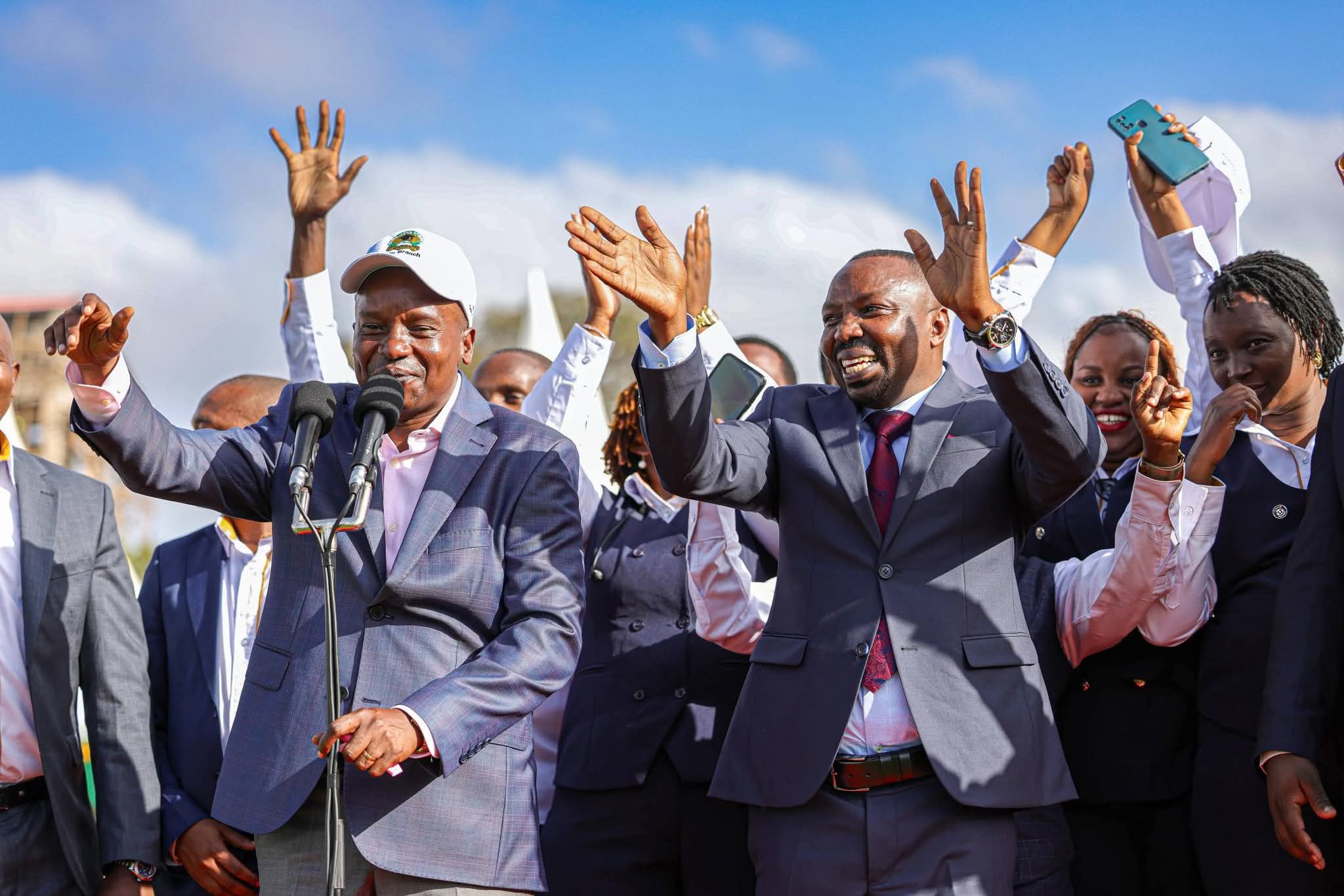
Deputy President Kithure Kindiki has called on teachers across Kenya to take a stronger role in nurturing discipline, patriotism, and peaceful coexistence among learners, warning that the country is witnessing a worrying increase in violent approaches to solving disputes.
Speaking during an engagement with officials and members of the Kenya Union of Post Primary Education Teachers (KUPPET) drawn from Meru County alongside delegates from different parts of the country, Kindiki said educators occupy a unique position in society and should help guide young people toward responsible citizenship.
The Deputy President noted that schools remain among the most important spaces for shaping character and values, stressing that teachers are not only tasked with academic instruction but also with helping students become disciplined, hardworking, and law-abiding citizens.
Kindiki expressed concern over what he described as a gradual rise in intolerance and violent behaviour in families, communities, and even political spaces. According to him, disagreements should be resolved through dialogue, understanding, and lawful processes rather than hostility or confrontation.
He urged teachers to actively mentor learners on peaceful conflict resolution and responsible conduct, arguing that the future stability of the country depends heavily on how young people are raised and educated today. He further encouraged teachers to remain role models who demonstrate integrity, professionalism, and national pride in their daily interactions with students.
At the same time, the Deputy President challenged the teaching fraternity to become champions in the fight against misinformation and disinformation. He warned that the spread of false information has become increasingly dangerous, especially in an era dominated by social media and digital platforms where misleading narratives can quickly influence public opinion.
Kindiki said teachers, due to their influence and credibility in communities, are well-positioned to help learners and members of the public distinguish facts from propaganda. He emphasized that misinformation has the potential to create unnecessary tensions, divide communities, and derail national progress if left unchecked.
The Deputy President also highlighted the government’s investment in the education sector since 2022, saying significant progress had been made in improving learning infrastructure and increasing access to education. He pointed to the recruitment of 100,000 teachers as one of the administration’s major achievements aimed at reducing teacher shortages and improving the quality of education across the country.
In addition, Kindiki said thousands of classrooms had been constructed to accommodate the growing number of learners under the new education system. He noted that reforms introduced in tertiary institutions had also contributed to a rise in student enrolment, allowing more young people to access university and technical education opportunities.
He further cited the hiring of additional tutors in tertiary institutions and the implementation of a student-centred funding model aimed at ensuring learners receive financial support based on their needs and circumstances.
On science education, Kindiki said the government is overseeing the construction of over 1,600 laboratories, particularly in schools that have historically faced infrastructural challenges. He expressed optimism that the move would improve performance in science-related subjects and create more opportunities for learners interested in technical and scientific careers.