IEBC Responds to Hassan Omar’s Claims on Dead Voters
The Independent Electoral and Boundaries Commission (IEBC) has dismissed claims by United Democratic Alliance (UDA) Secretary General Hassan Omar suggesting that deceased Kenyans could be used to cast votes in the 2027 General Election.


The Independent Electoral and Boundaries Commission (IEBC) has dismissed claims by United Democratic Alliance (UDA) Secretary General Hassan Omar suggesting that deceased Kenyans could be used to cast votes in the 2027 General Election.
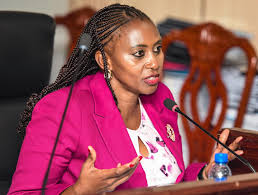
IEBC Commissioner Alutalala Mukhwana said the commission’s biometric voter verification system is designed to prevent such a scenario, insisting that voters must undergo physical identification before being cleared to vote.
Mukhwana explained that the Kenya Integrated Election Management System (KIEMS) kits rely on biometric features, including fingerprints and iris recognition, to verify voters at polling stations.
He argued that the technology makes it impossible for a deceased person to complete the verification process required before casting a ballot.
His remarks came after Omar made controversial comments at a political gathering in Mombasa, raising concerns over the possibility of dead people being used to influence the outcome of the 2027 presidential election.
The UDA official’s remarks triggered debate over the integrity of the voters’ register and the safeguards that will be used during the next election.
The IEBC response comes at a time when preparations for the 2027 General Election are increasingly becoming a subject of political discussion, with various leaders raising questions about the credibility and preparedness of electoral institutions.
Mukhwana sought to reassure Kenyans that the commission has mechanisms in place to verify voters and protect the integrity of the voting process.
The commissioner maintained that biometric verification remains a key safeguard against impersonation and other forms of electoral malpractice.
Omar’s remarks have nevertheless continued to attract political attention, with several leaders and commentators calling for clarification on how the electoral system will prevent attempts to use the identities of deceased voters.
The controversy has also renewed focus on the accuracy of Kenya’s voters’ register and the measures taken by the IEBC to keep the database updated ahead of the polls.
The electoral commission has previously undertaken processes aimed at cleaning and updating voter records, including identifying irregularities in the register.
The IEBC has, however, maintained that its electronic verification system provides safeguards intended to ensure that only eligible and physically present voters are allowed to cast ballots.