Nakuru Tree Felling Sparks Outrage as Residents and Scientists Warn of Environmental Risks
The removal of mature jacaranda trees along Oginga Odinga Street in Nakuru has sparked concern among residents and environmental experts, with questions emerging over the balance between infrastructure development and environmental conservation.

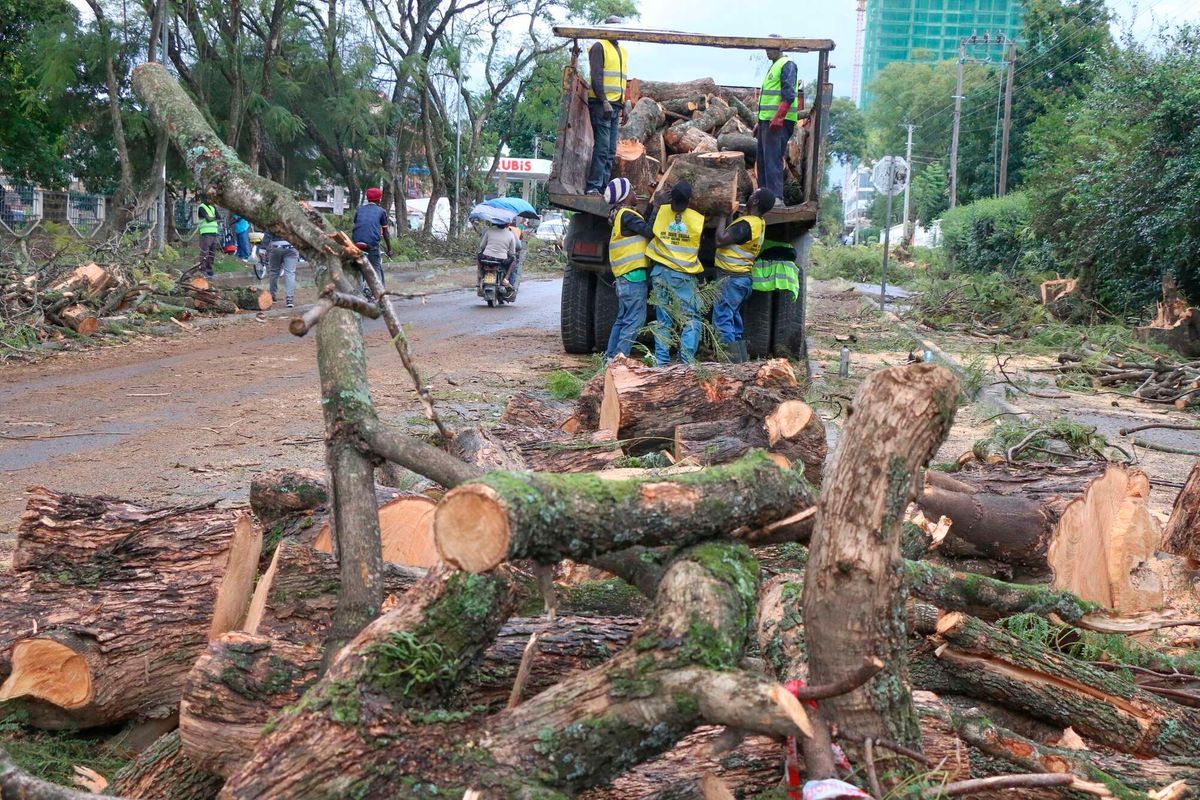
The removal of mature jacaranda trees along Oginga Odinga Street in Nakuru has sparked concern among residents and environmental experts, with questions emerging over the balance between infrastructure development and environmental conservation.
The trees, some believed to have been planted in the 1950s, have formed part of Nakuru’s identity for decades, providing shade to pedestrians and traders while contributing to the city’s distinctive landscape.
Their removal is linked to a road expansion project by the Kenya Urban Roads Authority (KURA), which aims to ease traffic congestion along a five-kilometre stretch connecting the Industrial Area to Free Area and the Nakuru-Nairobi Highway.
However, the project has triggered debate over whether the environmental costs of expanding the road have been adequately addressed.
Residents Raise Concerns Over Loss of Green Spaces
For long-time residents, the jacaranda trees represent more than roadside vegetation. They are part of the city’s history and have helped shape its character over several generations.
Antony Mwithaga, who has lived in Nakuru for 55 years, says the trees have played an important role in maintaining the town’s environment and preserving its identity.
He argues that infrastructure projects should incorporate environmental protection rather than automatically sacrificing mature trees to create additional road space.
Residents have also questioned whether sufficient public participation took place before the trees were cut down, arguing that community members and technical experts could have proposed alternative designs.
Traders operating along Oginga Odinga Street have expressed concern about the disruption caused by the construction works. Some say the trees provided shade for their businesses, while felled logs and ongoing works have affected pedestrian movement.
KURA Defends Road Expansion Project
KURA says the expansion is necessary to address congestion along one of Nakuru’s busiest roads and prepare the city for increased traffic.
The Sh850 million project is expected to transform the existing road into a four-lane dual carriageway, with two lanes in each direction. It will also include pedestrian walkways and drainage channels designed to improve movement and reduce flooding in low-lying areas.
According to the authority, the project requires a road reserve of approximately 30 metres, compared with the existing corridor, which measures slightly more than 15 metres.
KURA has indicated that approximately 200 trees will need to be removed to facilitate construction.
The authority has also promised to plant replacement trees once the road works are completed, in line with environmental requirements.
The project is expected to take 24 months to complete.
Environmental Experts Question Compliance
Environmental scientist Jackson Raini of the Flamingo Conservation Network has criticised the removal of the trees, questioning whether the required environmental assessments and public consultations were conducted.
Raini said the National Environment Management Authority had informed the group that it had not received the environmental and social impact assessment report for the road expansion project.
He argues that the absence of documented approvals and meaningful public engagement raises questions about compliance with environmental and constitutional requirements.
Environmental experts have also warned that removing mature trees could worsen dust pollution, reduce shade and weaken the city’s ability to manage heavy rainfall.
Trees help absorb carbon dioxide, filter airborne pollutants, regulate temperatures and slow rainwater runoff. Their removal can therefore have consequences extending beyond the immediate construction site.
Shrinking Green Spaces Raise Alarm
Nakuru has experienced significant urban expansion, with growing demand for housing, transport infrastructure and other developments placing pressure on its remaining green spaces.
Raini has raised concerns about the shrinking vegetation cover in areas surrounding the city, including Menengai Forest and parts of the Eastern Mau forest complex.
He warns that continued destruction of vegetation could undermine national efforts to increase tree cover and strengthen resilience against climate change.
The concerns come as Kenya pursues its ambitious tree-growing programme, which aims to increase national tree cover and support environmental restoration.
For Nakuru, the loss of mature roadside trees is particularly significant because replacing them with newly planted seedlings does not immediately restore the benefits provided by established trees.
Flooding Concerns Add to Environmental Debate
The debate over tree removal comes amid growing concerns about flooding in Nakuru and other parts of the country.
In April 2024, a devastating flood near Mai Mahiu killed dozens of people after water swept through the area, destroying homes and infrastructure. Elsewhere in Nakuru County, residents have experienced flash floods, damaged drainage systems and the destruction of homes and farmland.
Environmental conservationists warn that poorly managed land use, inadequate drainage and the loss of vegetation can increase vulnerability to flooding, although the severity of any particular flood depends on several factors.
KURA says improved drainage is part of the Oginga Odinga Street project and is intended to address flooding affecting downstream communities.
The effectiveness of these measures will be important as Nakuru continues to expand and faces the challenges associated with changing weather patterns.
Calls for a Balance Between Development and Conservation
The controversy has renewed calls for infrastructure projects to incorporate environmental considerations from the planning stage.
Environmental campaigners argue that engineers should explore designs that preserve mature trees wherever possible and ensure that any unavoidable removal is accompanied by a transparent and effective restoration plan.
The debate also highlights the importance of public participation, environmental assessments and coordination between national agencies and county governments before projects affecting public spaces are implemented.
As construction continues along Oginga Odinga Street, residents will be watching to see whether the promised replacement trees materialise and whether the road upgrade delivers the intended improvements without further compromising Nakuru’s environment.