Kenyan Football’s Troubling Record of Referee Attacks
Kenyan football is facing renewed scrutiny over persistent violence against match officials following the assault of referee John Sulwe during a promotion play-off between Kariobangi Sharks and Mombasa United at Ulinzi Sports Complex in Nairobi.

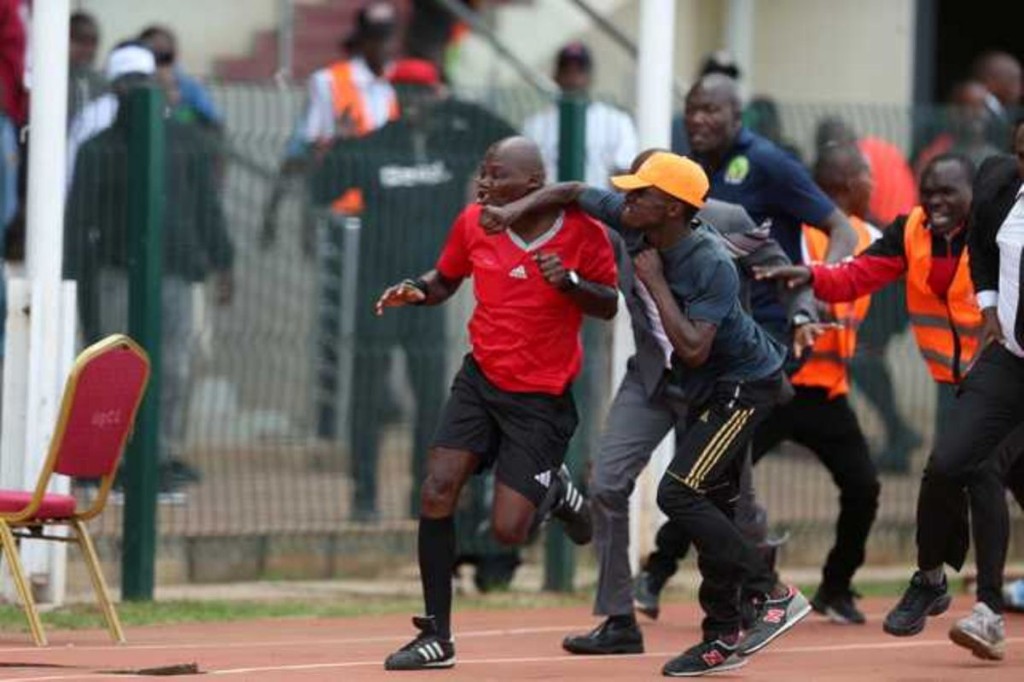
Kenyan football is facing renewed scrutiny over persistent violence against match officials following the assault of referee John Sulwe during a promotion play-off between Kariobangi Sharks and Mombasa United at Ulinzi Sports Complex in Nairobi.
The incident occurred on October 6, 2026, when Sulwe awarded Mombasa United a penalty in the second leg of the Kenya Premier League promotion play-off. Kariobangi Sharks were leading 2-1 at the time, having scored through Patila Omoto and Denis Omanga after Jamal Messi had given Mombasa an early lead.
Sharks players immediately surrounded the referee to protest the decision. The situation escalated when a section of supporters breached the perimeter barrier and pursued Sulwe, forcing him to flee with assistance from Kenya Defence Forces personnel and match marshals.
The match was abandoned amid the chaos, raising fresh concerns about the safety of referees and the effectiveness of measures intended to prevent violence at football grounds.
The incident is part of a long history of attacks on match officials in Kenya, with previous cases involving supporters and players angry over refereeing decisions.
In April 2013, violence erupted during a Kenyan Premier League Top Eight encounter between AFC Leopards and Chemelil Sugar at Nyayo National Stadium. Supporters invaded the pitch and attacked the referee, prompting Football Kenya Federation, then operating under its predecessor structure, to impose a lifetime ban on a fan identified as Dennis.
A decade later, another disturbing incident occurred at Bukhungu Stadium in Kakamega during a league match between AFC Leopards and Kakamega Homeboyz on April 12, 2023.
Leopards supporters protested after referee Michael Obuya declined to penalise Homeboyz goalkeeper Farouk Shikalo over an alleged handball outside the penalty area. Some fans subsequently invaded the pitch and assaulted Obuya with sticks, leaving him injured and requiring medical attention.
Police used tear gas to disperse the crowd, while Kakamega Governor Fernandes Barasa and other officials were evacuated from the VIP section. Rival supporters also clashed outside the stadium.
The Football Kenya Federation’s Leagues and Competitions Committee later awarded Homeboyz a 2-0 victory, deducted three points from Leopards and imposed a Sh500,000 fine. The club was also ordered to cover Obuya’s medical expenses and play four home matches behind closed doors.
However, similar incidents continued.
In March 2026, referee Simeon Ongaga was attacked during a Mozzart Bet Cup match between AFC Leopards and Mara Sugar at Jomo Kenyatta Stadium in Kisumu. Ongaga had initially awarded Leopards a late penalty before reversing the decision after consulting his assistant, triggering protests and a pitch invasion.
Another attack occurred on May 16 at Gems Cambridge Grounds in Nairobi, where referee Joshua Muthiga was chased by supporters following a National Super League match between Kibera Black Stars and 3K FC. The match ended goalless after supporters disputed a decision to disallow a goal.
Kenyan football has also recorded serious incidents involving players. In 1985, the Kenya Football Federation expelled Baruti FC, an army side, from its competitions and imposed lifetime bans on several players after they attacked referee William Ngaah during a league match against Breweries, now Tusker, at City Stadium.
The repeated incidents have raised questions about whether existing disciplinary measures are sufficient to deter violence.
Although football authorities have fined clubs, deducted points and ordered matches behind closed doors, identifying and punishing individual perpetrators remains a challenge.
The attack on Sulwe has renewed calls for stronger stadium security, consistent enforcement of disciplinary rules and accountability for those who assault match officials.
The latest case has once again placed the spotlight on the Football Kenya Federation and its responsibility to protect referees, players and supporters while preserving the integrity of the game.