How CBC Learners Will Earn Two Certificates After Senior School
Kenya's Competency-Based Education (CBE) system will introduce a dual certification model for learners completing Senior School, a major shift aimed at equipping students with both academic qualifications and practical workplace skills.

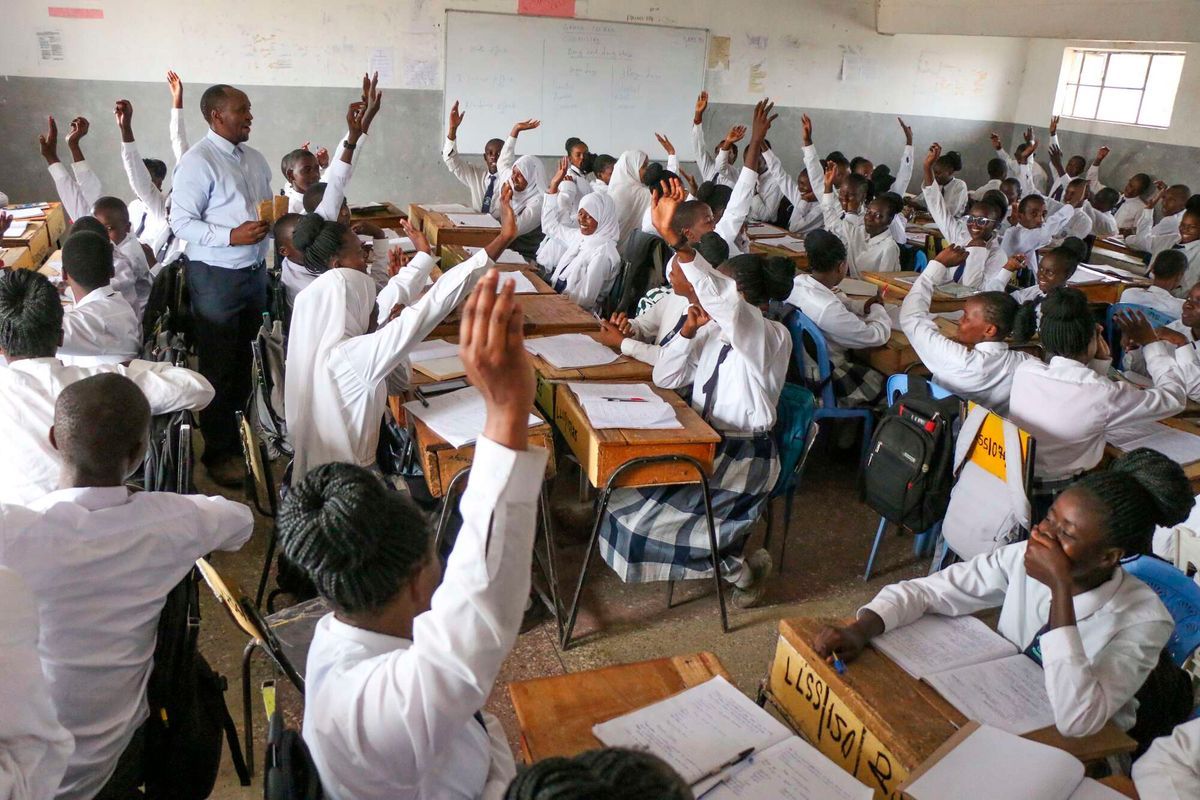
Kenya’s Competency-Based Education (CBE) system will introduce a dual certification model for learners completing Senior School, a major shift aimed at equipping students with both academic qualifications and practical workplace skills.
Under the new arrangement, learners who complete Grade 12 will receive two separate certificates, depending on the pathway and subjects they pursue. The reform is designed to bridge the gap between education and the labour market by ensuring students graduate with competencies that are recognised beyond the classroom.
The first certificate will be the Kenya Certificate of Basic Education (KCBE), which will be awarded by the Kenya National Examinations Council (KNEC) after learners successfully complete Senior School. This certificate will reflect their overall academic performance and competency development throughout Grades 10, 11 and 12.
The second qualification will be an industry-recognised competency certificate issued to eligible learners who undertake technical and vocational subjects. This certificate will validate practical skills acquired during Senior School and is intended to improve employability and entrepreneurship opportunities.
The dual certification programme will mainly benefit students enrolled in the Technical Studies track under the Science, Technology, Engineering and Mathematics (STEM) pathway. Subjects likely to qualify for the additional certification include electricity, power mechanics, woodwork, metalwork, building construction, media technology and marine and fisheries technology.
Senior School, which runs from Grades 10 to 12, officially began in January 2026 for the first group of learners transitioning from Junior School. Students will choose pathways based on their interests, abilities and career aspirations, with three main options available: STEM, Social Sciences, and Arts and Sports Science.
Assessment will no longer rely entirely on a final examination. Instead, learners will undergo continuous assessment throughout their Senior School years. School-based assessments conducted in Grades 10 and 11 will contribute 30 per cent of the final score, while the Grade 12 summative assessment will account for the remaining 70 per cent.
Education officials say the reforms are intended to move away from an examination-centred system and focus more on real-world competencies. Learners will be evaluated through projects, portfolios, practical tasks, simulations and workplace exposure, allowing them to demonstrate their abilities in different environments.
The competency certificates will also be aligned with national qualification standards and occupational classifications, making them more relevant to employers and training institutions both locally and internationally. The government hopes the approach will help address skills shortages while creating more pathways into employment and self-employment.
Education stakeholders have welcomed the initiative, saying it recognises that learners possess diverse talents that cannot be measured solely through written examinations. The dual certification model is expected to produce graduates who are academically prepared while also possessing practical skills needed in today’s rapidly changing economy.