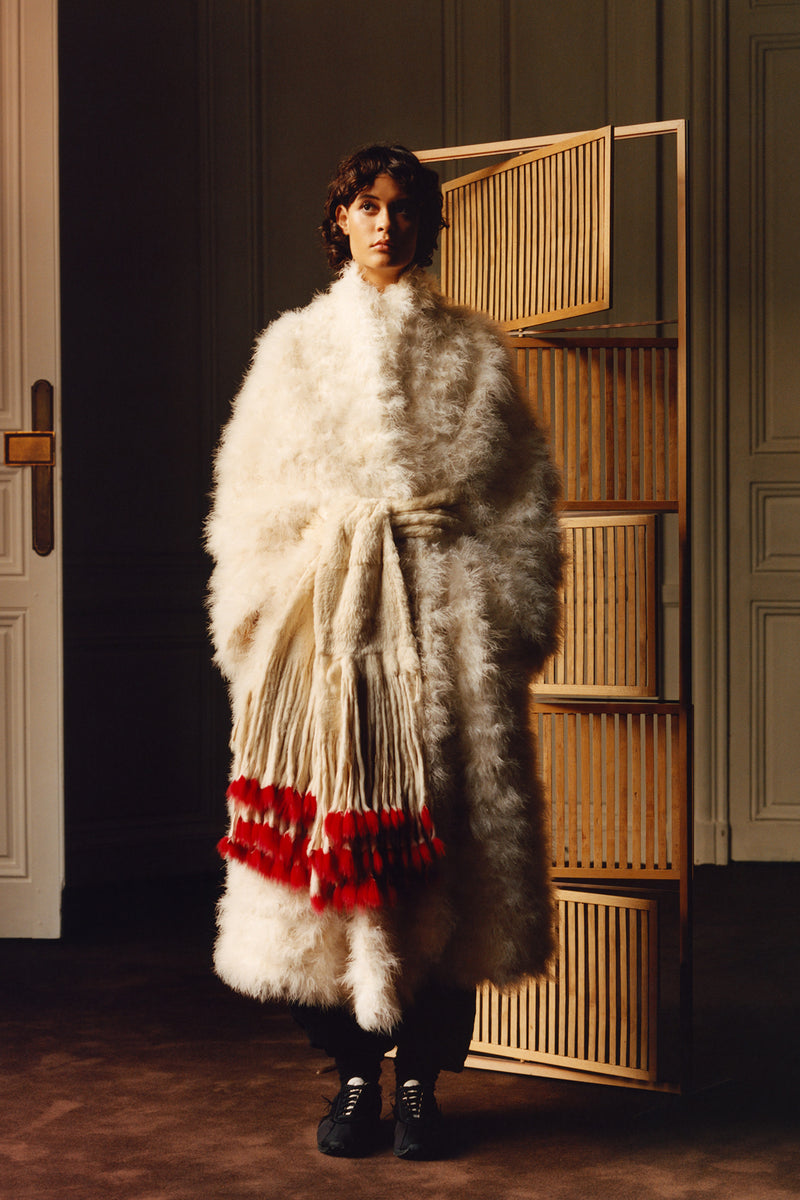
A Concise Retrospective of its Olsen Twins Minimalist Luxury Label: The Row Brand
Mary-Kate and Ashley Olsen did not set out to become the reigning architects of quiet luxury when they founded The Row in 2006. The label emerged from a personal frustration: the twins, already veterans of the entertainment industry since childhood, wanted a white t-shirt that actually fit well and lasted. That search for the perfect basic became the founding principle of a brand that now sits at the top of the fashion hierarchy, commanding prices and waitlists that rival houses with a century more history behind them.
The title itself serves as both a low-key jest and a sincere nod. The Row took its name and ethos from Savile Row, the London street closely tied to bespoke tailoring.. Precision, restraint, and craftsmanship over logos or seasonal noise. Nearly two decades later, that founding idea has not wavered, even as the brand has expanded into ready-to-wear, footwear, and the accessories category that arguably built its cult status: the row bags.
A Billion-Dollar Visual Identity Grown out of Basics
In its earliest chapter, the label stayed modest as a conscious choice.
Mary-Kate and Ashley launched with t-shirts and cashmere, slowly assembling a wardrobe of essentials before bringing in tailoring, outerwear, and eventually accessories.
By the early 2010s, serious industry credibility had settled on the brand; earning the CFDA’s Womenswear Designer of the Year award in 2012 was an uncommon achievement for a label so young, a sign that the fashion establishment now took the sisters seriously as designers as opposed to celebrities with a side project.
What marked out The Row as different to other celebrity-launched labels was an unwillingness to run after trends. While much of fashion in the 2010s leaned into logomania and maximalism, The Row moved in the opposite direction. Toned-down color schemes, exceptional fabrics, and silhouettes that prioritized fit over flash became the brand’s signature style. Today, “quiet luxury” describes precisely this kind of reserve, and it is https://therowbags.net/top-handle/ The Row that is widely credited as the label that established this aesthetic before it had a name.
The price structure has from the outset aligned with the elevated vision. The ready-to-wear line routinely climb into the thousands of dollars, and its leather offerings sit solidly in the upper four-figure bracket or beyond. The strategy was no accident — it was set from the beginning — the Olsens intended for The Row to compete with Hermès and Céline, as opposed to contemporary or diffusion lines. Nearly twenty years in, that comparison no longer feels like a stretch.
The Way The Row Bags Took Over
In cases where ready-to-wear cemented the label’s renown, it was the bags that morphed the brand into a outright object of widespread fascination. The label’s handbags inhabit a odd yet enviable position in the market: they are simultaneously minimalist to the point of anonymity and immediately identifiable to the fashion-literate. Few styles show any logo at all, no branded hardware shouting for attention. Instead, recognition comes from contour, balance, and how the leather hangs.
Within the row bag lineup, a handful of styles have achieved almost legendary standing. Margaux, with its soft, formless outline and distinctive side pleats, emerged as one of the most Googled bags going the moment it was spotted on Mary-Kate Olsen’s own arm. Those looking into where to purchase The Row Margaux bag quickly find out that availability is limited and secondary-market prices frequently top the original retail figure, an obvious sign that wanting outstrips having. Multiple size and leather options exist for the bag, and every version has its own wait time depending on which season and retailer.
The Row tote bag is another anchor point of the lineup, prized for its build that balances structure with softness and its knack for shifting between editorial shoots and daily errands without looking out of place in either context. The Row’s totes tend to prioritize simple silhouettes and understated fittings, underscoring the label’s broader outlook that a bag should be evaluated for build and material, not brand signaling.
If you’re putting together a row bags overview before buying, it helps to recognize that the brand structures its accessories differently from the way most luxury labels typically do. The label avoids anointing one “it bag” per season. Instead, a rotating set of standout row bags — Margaux, Sofia, Ascot, and a few others — get periodic revisions in hue and dimension while retaining their original silhouette for years at a time. This is intentional. The Row wants its bags to function like investment pieces, not passing impulse buys tied to a season.
Why Craftsmanship Drives the Sell
Any discussion of The Row circles back, sooner or later, to materials. The brand sources leather from top-tier European tanneries and partners with ateliers focused on handbag-making, frequently the very facilities relied on by storied luxury houses. This helps explain why the row bag category sits at such elevated price points — the leather itself, before any labor is factored in, represents a significant cost.
Build quality matter enormously here. Hand-stitching, minimal seams, and hardware that is often custom-cast rather than sourced from a catalog all feed into a finished product that stands apart distinctly from luxury items made at scale. Those who’ve compared a Margaux side by side with a similar bag from a more logo-centric house often note the leather’s weight and softness as the quickest tell of quality.
This commitment to material quality is also evident in ready-to-wear as well, where cashmere sourced from specific regions and wool blends developed with Italian mills solidify the label’s premium positioning. The outcome is a lineup where consistent quality control shows up regardless of category, be it a coat, a shoe, or one of the row handbags.
Finding Your Way Through a The Row’s Sale Events and Resale Value
Price cuts at The Row don’t come often, and whenever a row sale does happen, it tends to be modest compared to the steeper price cuts other luxury houses typically offer. Because the label controls distribution tightly and produces in relatively limited quantities, oversupply rarely happens, which means there is less inventory that needs to be discounted at season’s end. Anyone hoping for a notable markdown might need to watch select multi-brand retailers for their own sale periods instead of expecting price cuts directly from The Row.
An interesting consequence of this scarcity is robust resale value. Some bags—the Margaux especially—have been known to maintain or surpass their original retail price when resold. That’s rare in the fashion world, where the majority of bags lose value the instant they leave the shop. This also accounts for why so many buyers view a purchase from The Row as a long-term investment instead of a passing seasonal treat.
When it comes to tracking down a row sale, patience and persistence generally serve shoppers better than acting with urgency. Following authorized stockists and signing up for notifications from department stores that carry The Row fashion line is generally more productive than expecting frequent promotions from the brand’s own channels.
Setting Side by Side The Row’s Hallmark Bag Styles
Grasping the distinctions among the top row bags makes it easier to see which style fits a particular lifestyle or budget. Below, the table provides a broad comparison drawn from publicly available details on each style’s design intent, leaving out specific prices that shift by retailer, region, and season.
| Bag Style | Shape | Most Fitting Use | Hardware Finish |
|---|---|---|---|
| Margaux | Slouchy, unstructured tote | Everyday carry, editorial styling | Minimal, tonal |
| Classic Tote Bag by The Row | Crisp, architectural | Office use, travel, dressier occasions | Discreet metal touches |
| Sofia | Compact shoulder bag | Evening wear or streamlined daily carry | Concealed clasp |
| Ascot | Architectural top-handle | Work contexts, dressier occasions | Sculpted handle, without visible branding |
This kind of row bags overview is useful for narrowing down a first purchase, especially for shoppers new to the brand who may feel overwhelmed by how similar the silhouettes can appear at first glance. The differences, while subtle, are meaningful once a bag is in hand.
The Row à l’horizon 2026, un état des lieux de la marque aujourd’hui
The Row, approaching 2026, displays no hint of relaxing its hold on the understated-luxury discourse. Show after show, the house elects to appear at Paris Fashion Week, a deliberate choice positioning it among Europe’s most established houses instead of its American contemporaries. The reward of this decision, settled upon years back, has shown up in both critical esteem and commercial standing.
Distribution remains intentionally narrow. The Row is sold through its own flagship boutiques and a short list of authorized luxury retailers, a strategy that keeps inventory tight and demand high. Shoppers researching where to buy The Row Margaux bag in 2026 will find that authorized stockists remain the safest route, both for authenticity guarantees and for any future resale value the bag might carry.
These days, its impact on the broader fashion landscape is impossible to overlook. Many other labels have tried to mimic the recipe of subdued tones, superior fabric, and logo-free design, but scarcely any have equaled the steadiness The Row has maintained since 2006. The Row continues to be one of the most convincing proofs that restraint, executed thoughtfully, can be its own form of refinement — particularly for those assembling a wardrobe centered on lasting value rather than trend cycles.