
Ruto Orders Mandatory Training for All Administration Officers to Boost Service Delivery
The Head of State noted that the last comprehensive training for chiefs and assistant chiefs took place in 2016, creating a gap that has slowed efficient implementation of government projects

By : Mweru Mbugua
President William Ruto has directed the Ministry of Interior to implement compulsory training for all National Government Administration Officers (NGAOs) as part of efforts to strengthen service delivery across the country
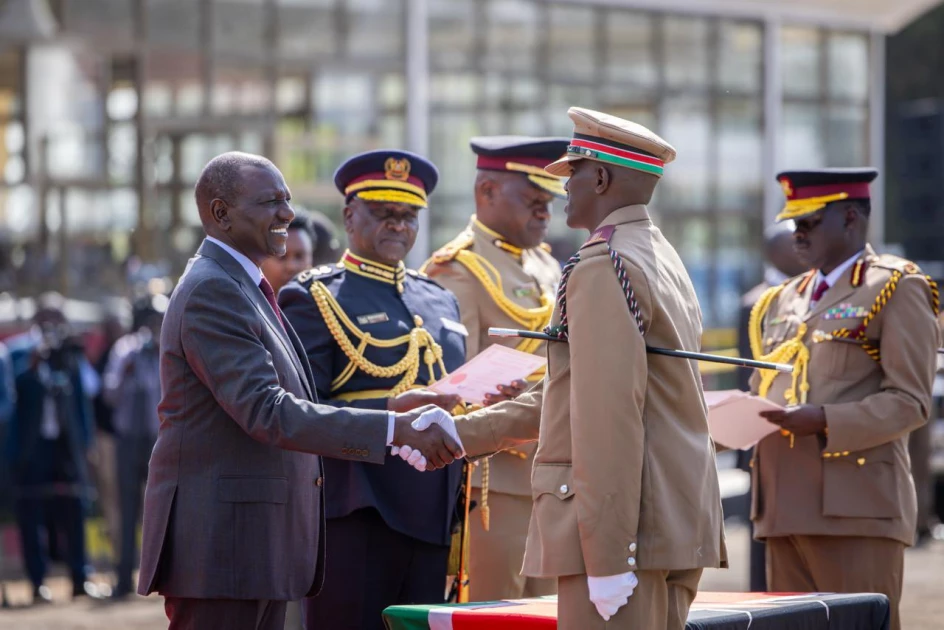
Speaking on Monday, December 1, while presiding over the graduation of chiefs and assistant chiefs at the National Police College Embakasi ‘A’ Campus in Nairobi, President Ruto emphasized the need for officers to be equipped with modern skills and knowledge necessary to execute their duties effectively
“You must continuously educate yourselves on government programmes, ensuring that you articulate them accurately and confidently,” he told the graduating officers
The Head of State noted that the last comprehensive training for chiefs and assistant chiefs took place in 2016, creating a gap that has slowed efficient implementation of government projects
He directed that all new officers undergo training within six months of recruitment
“Every officer chief, assistant chief, and any other newly hired officer should not stay for more than six months before they come for this training,” he said
A total of 1,837 officers graduated on Monday, with training for an additional 6,000 chiefs and assistant chiefs scheduled to start soon
President Ruto underscored the critical role NGAOs play in supporting the Bottom-Up Economic Transformation Agenda (BETA), especially at the grassroots level
Also read : Newly Elected Chwele–Kabuchai MCA Summoned by DCI Over Controversial Robbery Probe
“You are the bridge between the State and wananchi in the remotest village, the first responders when a crisis strikes, and the daily visible face of government to millions of Kenyans,” he noted
He urged the officers to champion government programmes, ensure farmers access necessary services, resolve resource-based disputes promptly, and guarantee equitable distribution of opportunities and inputs
The directive comes as the government intensifies efforts to enhance efficiency in public administration and strengthen coordination between national policies and local communities