
Report Reveals Why Kenya’s Elections Cost Billions
Kenya’s elections remain among the most expensive exercises in the country, with a new report pointing to intense political competition, mistrust and weaknesses in electoral institutions as key drivers of the rising costs.

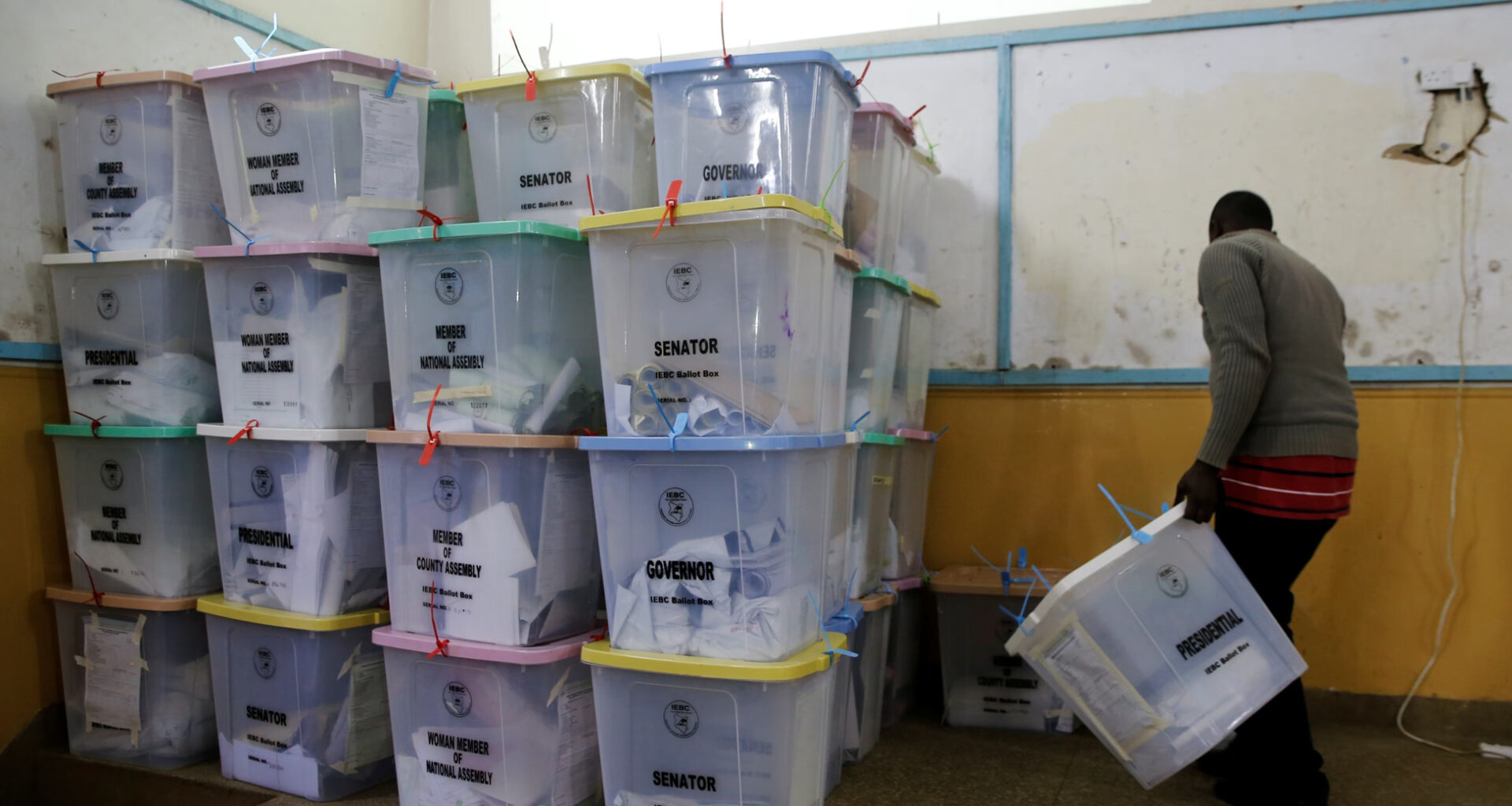
Kenya’s elections remain among the most expensive exercises in the country, with a new report pointing to intense political competition, mistrust and weaknesses in electoral institutions as key drivers of the rising costs.
The report says cutting the amount spent on elections will require more than reducing the budget of the Independent Electoral and Boundaries Commission (IEBC).
Instead, it recommends wider political and institutional reforms aimed at restoring public confidence and reducing tensions around elections.
According to the findings, Kenya’s highly competitive politics has made elections increasingly costly, with politicians spending heavily to mobilise voters, run campaigns and secure political support.
The high stakes involved in elections have also contributed to increased spending by political parties and candidates, as winning political office is often viewed as a gateway to power and access to resources.
Mistrust drives up costs
The report identifies lack of trust in electoral institutions as another major challenge.
Political parties and candidates who fear that the electoral process could be manipulated often demand additional safeguards to protect the integrity of the vote.
This has increased spending on election monitoring, security, technology and other measures designed to strengthen the credibility of the electoral process.
The report argues that improving confidence in electoral institutions could significantly reduce some of these costs.
It recommends strengthening institutions responsible for managing elections while ensuring that electoral processes are transparent, predictable and trusted by political players.
Reforms needed before 2027
With Kenya heading towards the 2027 General Election, the report warns that the cost of conducting elections could remain high unless deeper political reforms are undertaken.
It argues that simply cutting the IEBC budget would not solve the problem because many of the expenses are linked to the wider political environment.
The report therefore calls for reforms that address political competition, electoral mistrust and institutional weaknesses.
The findings come at a time when political parties and aspirants are already positioning themselves ahead of the 2027 polls, setting the stage for another highly competitive election.
The report concludes that Kenya must look beyond the cost of running elections and tackle the underlying political and institutional problems that continue to make the exercise increasingly expensive.