How to Get KCSE, KILEA, KIPSEA and KJSEA Examinations Revision Materials and Prepare for Exams
As national Examinations and assessments approach, learners across Kenya are encouraged to begin their revision early by using reliable study materials, practising past papers and developing effective study routines.

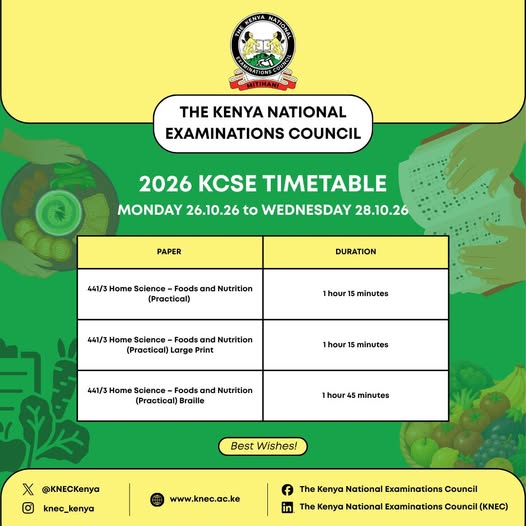
As national examinations and assessments approach, learners across Kenya are encouraged to begin their revision early by using reliable study materials, practising past papers and developing effective study routines.
Candidates preparing for the Kenya Certificate of Secondary Education (KCSE), Kenya Intermediate Level Education Assessment (KILEA), Kenya Intermediate Pre-School Education Assessment (KIPSEA) and Kenya Junior School Education Assessment (KJSEA) can improve their preparedness by accessing relevant revision resources and following structured study plans.
Where to Get Revision Materials
Learners, parents and teachers can obtain revision materials from several sources.
1. Kenya National Examinations Council (KNEC)
The KNEC website provides official information about national examinations and assessments, including examination guidelines, assessment formats and other learning resources where available.
Visit: https://www.knec.ac.ke/

2. Ministry of Education
The Ministry of Education website provides curriculum policies, education guidelines and official announcements that can help learners and teachers understand assessment requirements.
Visit: https://www.education.go.ke/
3. Kenya Institute of Curriculum Development (KICD)
KICD provides curriculum designs and learning resources aligned with Kenya’s education system. These materials can help learners revise topics covered in their respective classes.
Visit: https://kicd.ac.ke/
4. Schools and Teachers
Learners should consult their teachers for revision notes, topical questions, mock examinations and recommended textbooks. Schools can also provide guidance on the subjects and topics that require additional attention.
5. Bookshops and Educational Websites
Revision books, topical questions and practice examinations are available from educational publishers and bookshops. Learners should confirm that the materials match their current curriculum and assessment requirements before purchasing or downloading them.
How to Revise Effectively for Examinations
Getting revision materials is only the first step. Learners also need a practical study strategy that helps them understand and remember what they have learned.
1. Create a Revision Timetable
Develop a daily or weekly timetable that allocates sufficient time to every subject. Give extra attention to difficult topics while ensuring that stronger subjects are not neglected.
2. Practise Past Papers and Sample Questions
Work through available past Examinations papers, mock examinations and sample assessment questions. Practising under timed conditions can help learners improve their speed, accuracy and confidence.
3. Understand Concepts Instead of Memorising Everything
Focus on understanding key concepts, formulas, definitions and processes. Explaining a topic in your own words can help you identify areas that need further revision.
4. Identify Weak Areas
After completing practice questions, mark your answers and review your mistakes. Keep a notebook of difficult questions and revisit them regularly until you understand how to solve them.
5. Study in Short, Focused Sessions
Break Examinations revision into manageable sessions, taking short breaks between them. Put away distractions such as unnecessary phone notifications and social media during study time.
6. Revise With Classmates
Group discussions can help learners explain difficult concepts to one another, compare answers and identify gaps in their understanding. Keep study groups focused on specific topics and objectives.
7. Get Enough Sleep and Eat Well
Adequate sleep, balanced meals, hydration and regular physical activity support concentration and learning. Avoid sacrificing sleep to study throughout the night.
Special Advice for Different Examinations Assessments
- KCSE candidates: Revise the prescribed secondary-school syllabus, practise subject-specific examination questions and follow the instructions provided by teachers and KNEC.
- KJSEA candidates: Focus on Grade 7, Grade 8 and Grade 9 learning outcomes, depending on the applicable assessment requirements, and practise questions that reflect the current Junior School curriculum.
- KILEA and KIPSEA candidates: Confirm the official assessment requirements, learning areas and sample materials applicable to their particular programmes through KNEC, their institutions and teachers.
Final Advice to Candidates
Success in examinations depends on consistent preparation, understanding the curriculum and practising questions regularly. Learners should avoid relying on unverified Examinations leaks or materials claiming to contain guaranteed examination questions.
Parents and teachers can support candidates by providing a conducive study environment, monitoring progress and encouraging learners to seek help whenever they encounter difficulties.
With the right revision materials, a realistic timetable and consistent practice, candidates can approach their Examinations with greater confidence and preparedness.