
Hassan Omar Refuses to Apologise to IEBC Over Controversial Dead Voters Remarks
United Democratic Alliance (UDA) Secretary-General Hassan Omar has defended his controversial remarks suggesting that fingerprints of deceased Kenyans could be used to vote for President William Ruto in the 2027 General Election, insisting that he owes the Independent Electoral and Boundaries Commission (IEBC) no apology.

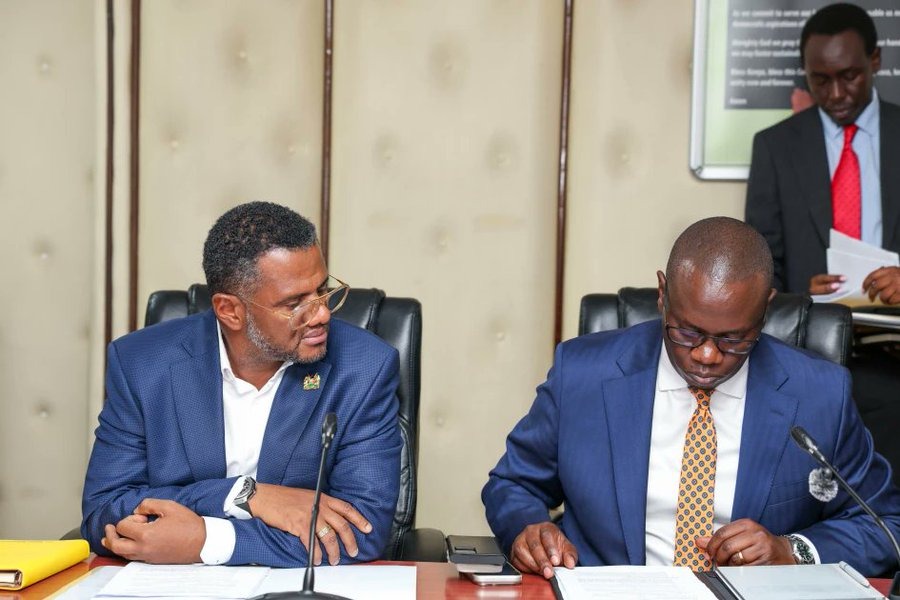
United Democratic Alliance (UDA) Secretary-General Hassan Omar has defended his controversial remarks suggesting that fingerprints of deceased Kenyans could be used to vote for President William Ruto in the 2027 General Election, insisting that he owes the Independent Electoral and Boundaries Commission (IEBC) no apology.
Omar appeared before the IEBC’s Electoral Code of Conduct Enforcement Committee on Wednesday, October 21, 2026, to respond to allegations arising from comments he made during a political rally in Mombasa on September 11.
The remarks sparked public outrage after he suggested that fingerprints of recently deceased people could be taken before burial and used to cast votes in their names.
Omar Says Remarks Were Taken Out of Context
During the disciplinary proceedings, Omar maintained that his comments had been misunderstood, arguing that he had used figurative language to encourage residents of the Coast region to register as voters and participate in elections.
He said the message was intended to motivate residents who, according to him, had not been turning up in large numbers for voter registration.
Omar also invoked linguistic and cultural differences, arguing that expressions used in Mombasa could be interpreted differently outside the region.
IEBC Questions Legality of the Remarks
The commission, however, maintained that Omar’s statement could be interpreted as encouraging the unlawful use of biometric voter identification to facilitate voting in the names of deceased persons.
IEBC Advocate Nancy Koros argued that the remarks raised concerns about compliance with electoral rules and the integrity of the voting process.
The committee is expected to consider the representations presented by Omar and determine the appropriate course of action.
UDA Secretary-General Expresses Confidence in Ruto’s Re-election
Despite the controversy, Omar insisted that he had no regrets over his remarks and maintained that UDA was well positioned to win the 2027 General Election.
He argued that the ruling party had a strong political advantage over its competitors and questioned why it would engage in electoral malpractice when it expected to win.
Omar is now awaiting the IEBC disciplinary committee’s decision.
The case comes as political parties intensify preparations for the 2027 elections, with the credibility of the voter register, biometric identification and electoral safeguards attracting increased public scrutiny.


