“Nairobi Hospital SAGA: Ruto Insists His Role Was to Protect, Not Interfere”
Speaking publicly on the issue, the President stated that he was approached by senior doctors who raised alarm over alleged fraudulent activities threatening the hospital’s stability. According to Ruto, these medical professionals sought government intervention to safeguard the institution from individuals they claimed were mismanaging resources and undermining its operations.

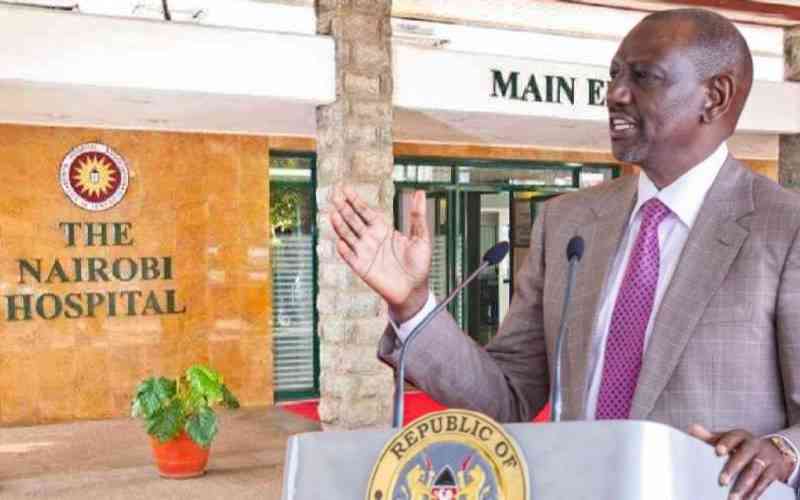
President William Ruto has come out strongly to defend his involvement in matters surrounding Nairobi Hospital, dismissing criticism and clarifying that his actions were driven by an urgent call to protect one of Kenya’s most vital medical institutions.
Speaking publicly on the issue, the President stated that he was approached by senior doctors who raised alarm over alleged fraudulent activities threatening the hospital’s stability. According to Ruto, these medical professionals sought government intervention to safeguard the institution from individuals they claimed were mismanaging resources and undermining its operations.
“I did not wake up one day and decide to intervene,” Ruto explained. “I was approached by senior doctors who were deeply concerned about the direction Nairobi Hospital was taking. They asked for help to save it from fraudsters.”
The President emphasized that his involvement was not political but rather a response to a crisis that could have had serious consequences for healthcare delivery in the country. Nairobi Hospital, widely regarded as a premier private healthcare facility, plays a crucial role in providing specialized medical services to Kenyans and patients from across the region.
Ruto further noted that any responsible leader would act when critical national institutions are at risk. He framed his actions as part of a broader commitment to accountability and good governance, stressing that public interest must always come first.
The issue has sparked debate across the country, with critics questioning the extent of executive involvement in private institutions, while supporters argue that intervention was necessary to prevent collapse and protect patients.
As the conversation continues, the President remains firm in his stance: his role was to respond to a distress call and ensure that Nairobi Hospital remains a trusted and functional healthcare provider.
BY WANGECI IRUNGU