
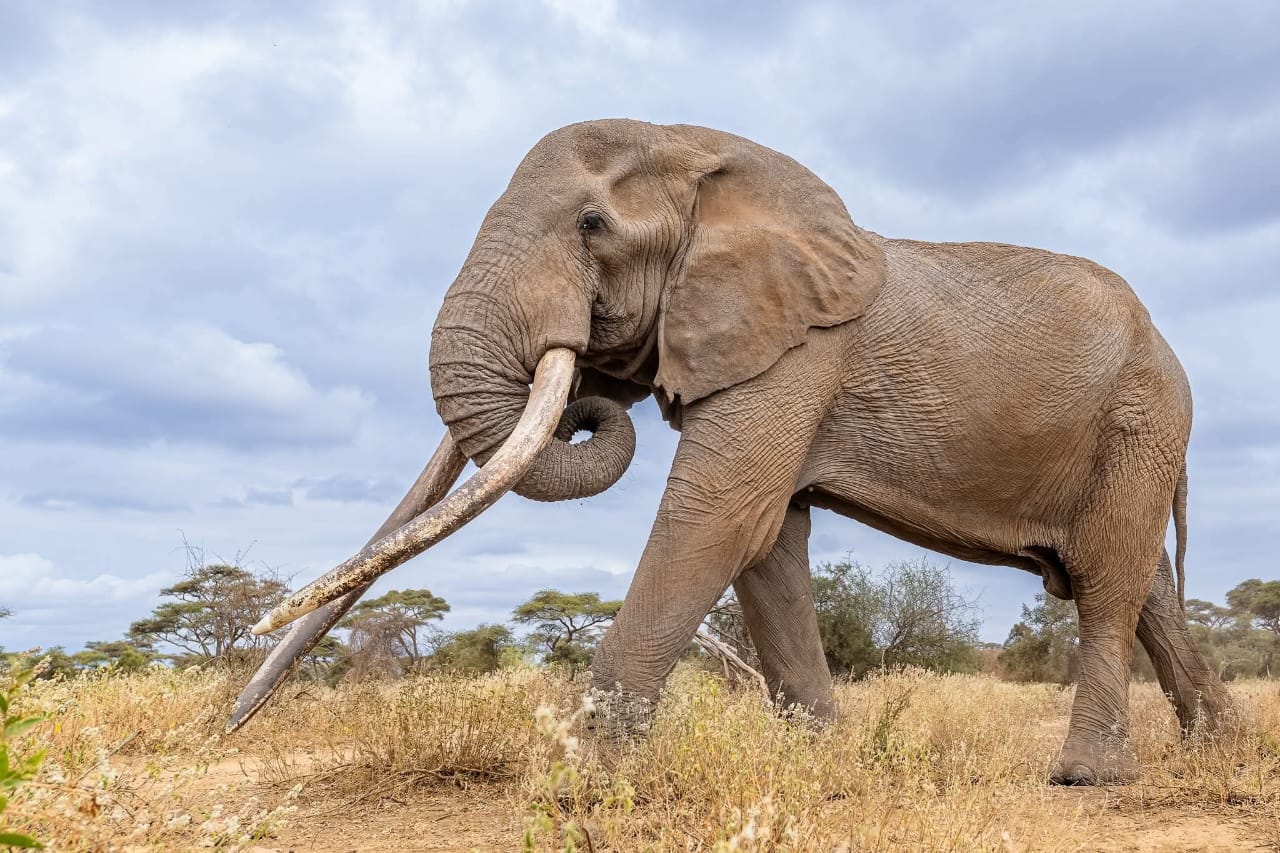
NAIROBI, Kenya, Jan 13 — The Kenya Wildlife Service (KWS) has initiated the taxidermy preservation of Craig, the world-famous Amboseli National Park “super tusker,” following his death on January 3 at the age of 54.
According to a statement released by KWS on Tuesday, the initiative aims to safeguard Craig’s legacy for education, scientific study, and public display.
The meticulous process will preserve Craig’s skin and distinctive physical features to create a lifelike mount, allowing future generations to learn from one of Africa’s last great tuskers.
Once completed, KWS will display the mount at a designated public facility.
Born in January 1972 to the legendary matriarch Cassandra of the CB family, Craig was among the rare class of elephants known as super tuskers — elephants whose tusks weigh over 45 kilograms (100 pounds) each.
With only a few such giants remaining in Africa today, Craig was a living symbol of the continent’s natural heritage and a testament to decades of conservation efforts.
“In recognition of Craig’s extraordinary ecological, scientific, and cultural significance, we have begun a professional taxidermy preservation process to ensure his legacy endures beyond his lifetime,” said KWS Director General Prof. Erustus Kanga.
“This initiative will provide future generations with a tangible connection to Kenya’s rich wildlife heritage.”
Throughout his long life, Craig fathered numerous calves, helping to ensure the continuation of his genetic lineage.
He was widely admired for his calm and dignified demeanor, which made him a global ambassador for Amboseli and a powerful symbol of ongoing conservation, scientific monitoring, and community collaboration led by KWS and its partners.
KWS emphasized that preserving Craig highlights the importance of documenting and celebrating conservation successes, even as the country continues to face threats to its wildlife.
The agency encouraged the public to honor Craig’s memory and reflect on the need to protect Kenya’s natural heritage for generations to come